Across nutrition science, public health guidance, and mainstream medical commentary, one message has become increasingly consistent: eat real food. This approach emphasizes foods that are whole, minimally processed, and naturally nutrient-dense—foods that nourish the body without excessive refinement or artificial additives.
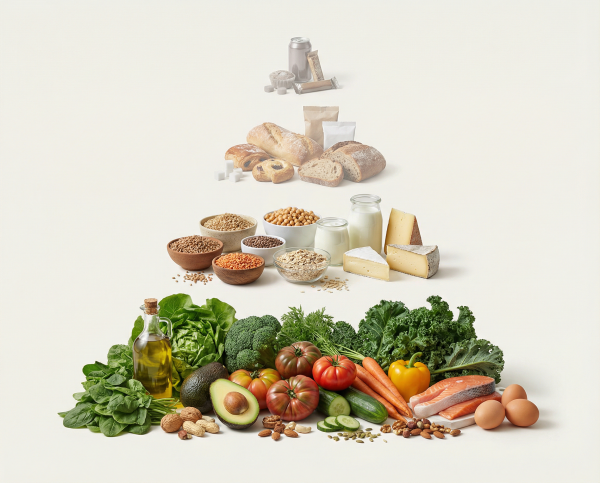
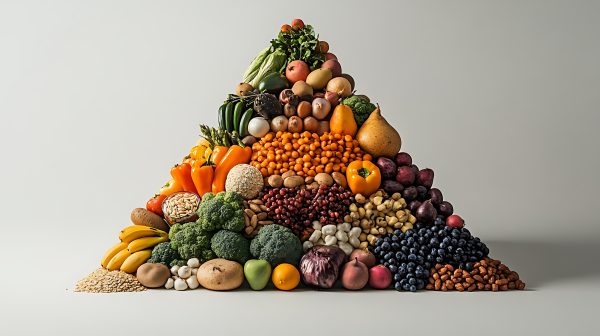
Vegetables, fruits, whole grains, legumes, nuts, seeds, and natural fats form the foundation of traditional food pyramids and modern dietary guidance alike. In recent years, the importance of food quality has been repeatedly highlighted by physicians, nutrition researchers, and public health experts, drawing attention to the risks associated with diets dominated by ultra-processed products. While perspectives may differ, there is broad agreement that whole, recognizable foods should anchor everyday nutrition.” While perspectives may differ, there is broad agreement that whole, recognizable foods should anchor everyday nutrition.
Traditional Foods and the Food Pyramid
Food pyramids, whether historical or contemporary in their design, consistently maintain whole foods as their essential foundation. These models emphasize vegetables, fruits, grains, and plant foods, supported by healthy fats and natural sources of nourishment.
Traditional plant-based oils extracted directly from seeds have long been part of food-centered cultures. They were valued not for convenience, but for their natural origin, minimal processing, and versatility within daily diets.
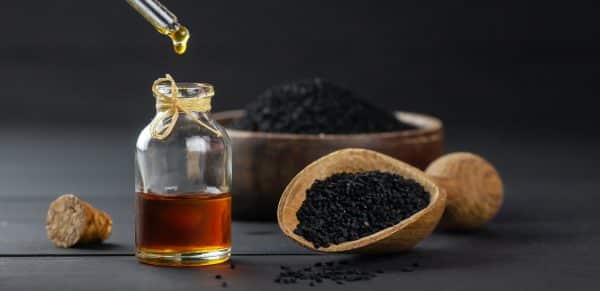
One such ingredient is black seed oil, derived from Nigella sativa, a seed historically used across the Middle East, Asia, and the Mediterranean as part of traditional food practices.
Where Black Seed Oil Fits Into Eating Real Food
Black seed oil is not a modern invention or a highly refined extract. It is a cold-pressed oil obtained directly from seeds, aligning closely with the principles behind eating real food.
Within whole-food–based eating patterns, black seed oil is valued because it:
- Comes from a single, whole plant source
- Is minimally processed
- Contains naturally occurring bioactive compounds
- Has a long history of traditional dietary use
Rather than replacing whole foods, oils like black seed oil function best as complements, supporting dietary variety while remaining rooted in natural food traditions.
Why Black Seed Oil Matters in Everyday Nutrition
Even when meals are centered on whole foods, daily nutrition can be influenced by modern lifestyle factors such as stress, inconsistent eating patterns, and environmental exposure. In discussions around food quality, many clinicians and public health commentators have emphasized the importance of returning to simpler, less processed dietary choices as a foundation for long-term well-being.
Black seed oil is often included in food-centered routines because it:
- Is plant-based and naturally sourced
- Fits easily into daily habits
- Aligns with clean-label and minimal-ingredient preferences
- Supports a holistic, food-quality–focused approach
Its simplicity reflects a broader shift away from ultra-processed foods and toward ingredients people recognize and understand.
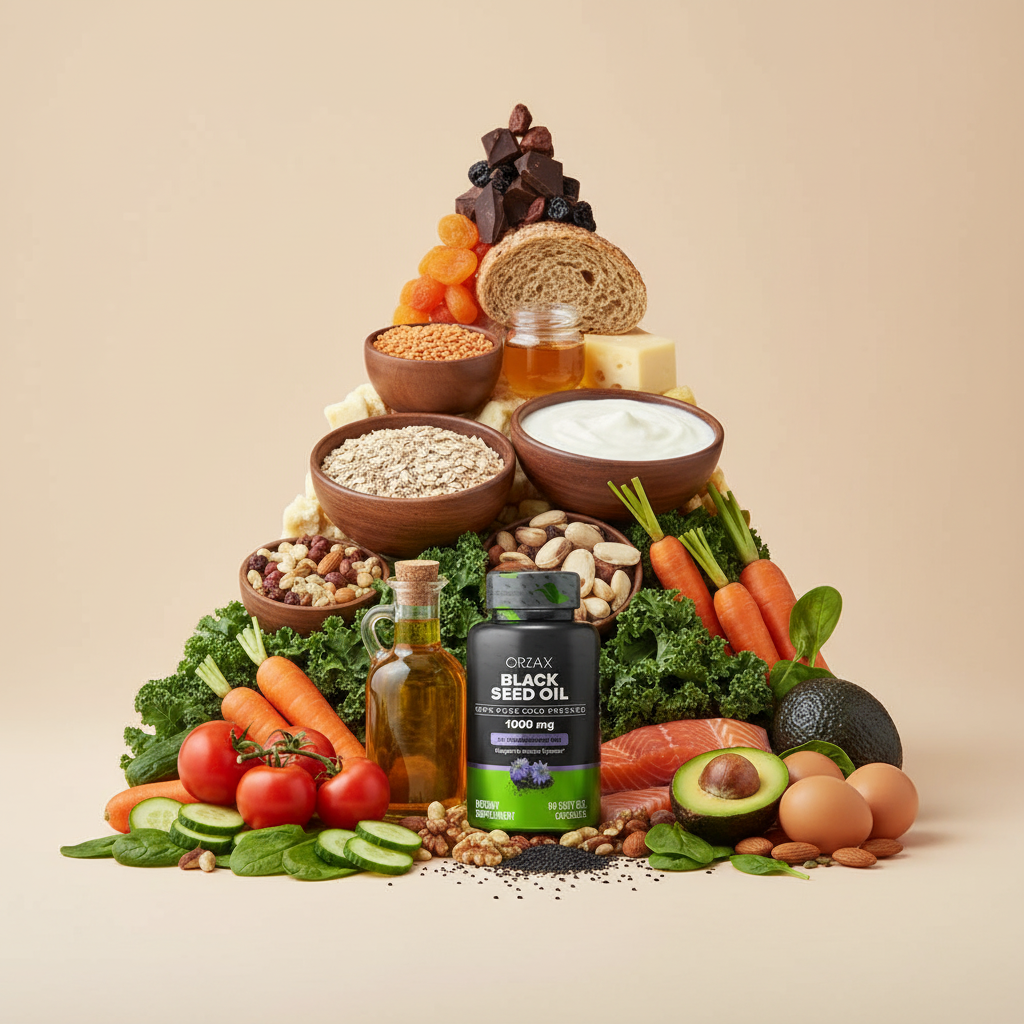
A Thoughtful Addition: Orzax Black Seed Oil
At Orzax USA, we believe health begins with real food. Products are developed to support balanced eating patterns, not replace them.
Produced with a focus on purity and simplicity, Orzax Black Seed Oil integrates naturally into diets centered on whole foods. When used alongside diverse meals, hydration, and mindful daily habits, it complements food-based nutrition while respecting the essential role of vegetables, fruits, grains, and other real foods.
Eat Real Food: A Long-Term Perspective
A return to fundamentals is evident in the renewed emphasis on real food, which focuses on selecting ingredients in their natural form rather than heavily processed alternatives. This message is echoed across public health policy, traditional food pyramids, and mainstream medical commentary.
Whole foods form the base. Thoughtful ingredients such as black seed oil can help support that base as part of a consistent, everyday approach to wellness.
At Orzax USA, this philosophy remains central:
- Emphasize whole, minimally processed foods
- Choose simple, transparent ingredients
- Support balance through informed choices
- Focus on long-term well-being over short-term trends
FAQ: Eat Real Food & Black Seed Oil
Is black seed oil considered part of real food nutrition?
Black seed oil is derived directly from Nigella sativa seeds and is minimally processed. While commonly used as a dietary supplement, its plant-based origin aligns closely with whole-food principles.
Can black seed oil replace whole foods?
No. Black seed oil serves as a complement to dietary patterns rich in vegetables, fruits, grains, and proteins, and is not designed to act as a substitute for these essential foods.
Why is black seed oil discussed alongside food pyramids and Eat Real Food messaging?
Because it reflects a traditionally used, minimally processed ingredient that fits within broader food-quality–focused approaches to nutrition.
References
- Sacks, F. M., Willett, W. C., Smith, A., Brown, L., Rosner, B., & Moore, T. (1995).
A summary of the scientific evidence supporting the U.S. Dietary Guidelines.
The American Journal of Clinical Nutrition, 62(6), 1367–1377. https://doi.org/10.1093/ajcn/62.6.1367
- United States Department of Agriculture. (1992). The Food Guide Pyramid. Center for Nutrition Policy and Promotion.
https://naldc.nal.usda.gov/catalog/CAT92987569
- Nestle, M. (1993). Food politics and the Nutrition Facts label. Journal of Nutrition Education, 25 (6), 247–250. https://doi.org/10.1016/S0022-3182(12)80144-9
- Nestle, M. (2003). Food Politics: How the Food Industry Influences Nutrition and Health. University of California Press.
- Harvard T.H. Chan School of Public Health. (2008). Healthy Eating Pyramid. Department of Nutrition. https://www.hsph.harvard.edu/nutritionsource/healthy-eating-pyramid/
- Schatzker, M. (2016). The Dorito Effect: The Surprising New Truth About Food and Flavor. Simon & Schuster.
- Sifferlin, A. (2026, January 4). New federal dietary guidelines unveil an updated food pyramid focusing on whole foods.
The Washington Post.
https://www.washingtonpost.com/health
- Miller, J. (2026, January 6).
New guidelines emphasize whole, nutrient-dense foods.
Connecticut Insider.
https://www.ctinsider.com